This is a short documentary film my brother and I made. It's about the tragic events that took place on August 31, 1982, in Lubin, Poland. These events contributed to the eventual collapse of the Communist regime in 1989. They are told through my father's personal story.
Comments are welcome.
Monday, March 22, 2010

Saturday, March 20, 2010
Which War?
Stephen Marche, writing on WWII in the March issue of Esquire, made the following comment:
"And God, we want to fight that war again, don't we? The enemy wore easily identifiable uniforms, with skulls on them and stuff. The conflict had a clear beginning, middle, and end, throughout which the U.S. was the ultimate hero. And after the war was all over, America taught the world the true meaning of victory, rebuilding its enemies with magnanimity, generosity, and wisdom."
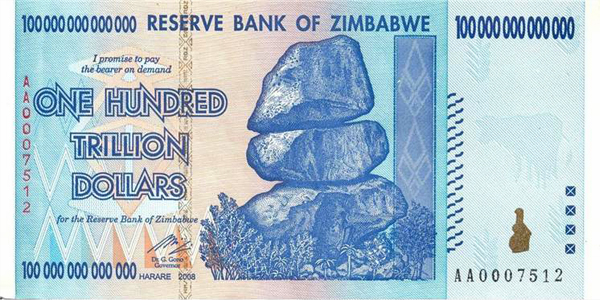
It's true that our rebuilding efforts in both Iraq and Afghanistan will never match what we achieved in Japan and Germany after World War II. Sixty years ago, both Tokyo and Berlin stood in ruins, reduced to rubble by Allied bombs and artillery shells. Today, Japan and Germany are the third and fifth largest economies in the world, respectively. The Marshall Plan turned out to be a brilliant exercise in not repeating the mistakes of wars past. A series of draconian measures imposed on the German Weimar Republic by the victorious Allied powers following World War I created the kind of hyperinflation seen again only in today's Zimbabwe, where they recently printed the first 100 trillion dollar note. In his memoir, The World of Yesterday, the Austrian playwright, Stefan Zweig, writes: "in Germany eggs went up to four billion marks, the approximate value of all the real estate in Greater Berlin." It was the promise of retribution for the effects of Versailles that eventually brought Hitler to power. Wisely, in 1945, we chose to rebuild, not punish.
Marche is also right on the issue of uniforms. Panzer tanks and the Luftwaffe aside, who wouldn't rather fight the style-minded German army than a bunch of ragtag freedom fighters with Kalashnikovs? Is that a Mujahid with an assault rifle, or a Pashtun farmer with a sickle?!? If this is 1944, maybe the question is irrelevant. But today's wars (except the ones in Africa) play out on 24-hour news cycles as much as they do on battlefields. And when shots of civilian corpses appear on television screens worldwide, the fight for the hearts and minds is being lost. And that's half the battle.
But would we really rather fight that other war again? Unless you ask the executives at Raytheon or Boeing, the answer is "no, hell no." While the War on Terror (including Iraq) has, by most estimates, claimed a little over a million lives, World War II killed sixty to seventy times as many. The Soviet Union alone suffered twenty-four million casualties and only one fifth of all Soviet males born in 1923 survived the war. Between ten and twenty million Chinese perished, and several countries lost more than ten percent of their entire populations. Between 1939 and 1945, the Allies dropped 3.4 million tons of bombs, many over crowded cities, and long before "precision strike" became part of our vocabulary. The firebombing of Dresden killed fifty thousand civilians in three days, while the air raids on Tokyo killed twice as many and wounded a million more. The war claimed the lives of half a million American soldiers, ten times more than Vietnam, and almost a hundred times more than Iraq.
Even without the horrors of the Holocaust and Hiroshima, the death and destruction sown by "the good war" were so vast, that they are simply unimaginable. So as romantic as the idea of fighting that war again may seem, if we must fight, let's stick to the wars of today.
Monday, March 1, 2010
Hypocrisy's Pinnacle
The meteoric rise and the magnificent fall is a pattern oft-repeated in history and nature. Financial markets and fragile empires, exalted careers and execrable reigns, the
The rationale for invading
That was the rise. And then came the fall. The aluminum tubes had nothing to do with uranium enrichment, the intelligence on yellow cake in
Today, most Republicans believe it was reason enough. In a recent survey of Republicans by Esquire magazine, 71% said that they felt the invasion was justified. Again: 71% of Republicans believe that we were justified in invading a sovereign country by military force and against the will of its people, causing mass death and destruction in the process…because Saddam was a bad guy. It was okay, you see, because we brought the Iraqis hope and change. That’s hope, and change.
But we Americans know better, because at home we fiercely oppose the same “gifts” we brought the Iraqis. We resist change. We hear of ideas that are different from what we’re used to and we label them “socialist” or “communist” or “fascist.” We reject, in the name of American exceptionalism, the notion that occasionally we’re wrong. We threaten to rise up, to arm our militias, to take down the democratically elected “dictator” who dares threaten us with a mandate given to him by the American people on Election Day: hope and change.
Isn’t that hypocrisy’s pinnacle?
The fall comes next.
Subscribe to:
Comments (Atom)


 Posts
Posts